
Ritual With Me
Designed an AI-powered mobile experience that transforms emotional reflection into a daily ritual — turning moods into music and feelings into generative art.
Role
UI/UX Designer
Scope
Product design · Interaction design · Visual system · Prototype
Timeline
Nov 2025 – Jan 2026
Type
0 - 1 Product Concept
AT A GLANCE
Three things I built and owned.
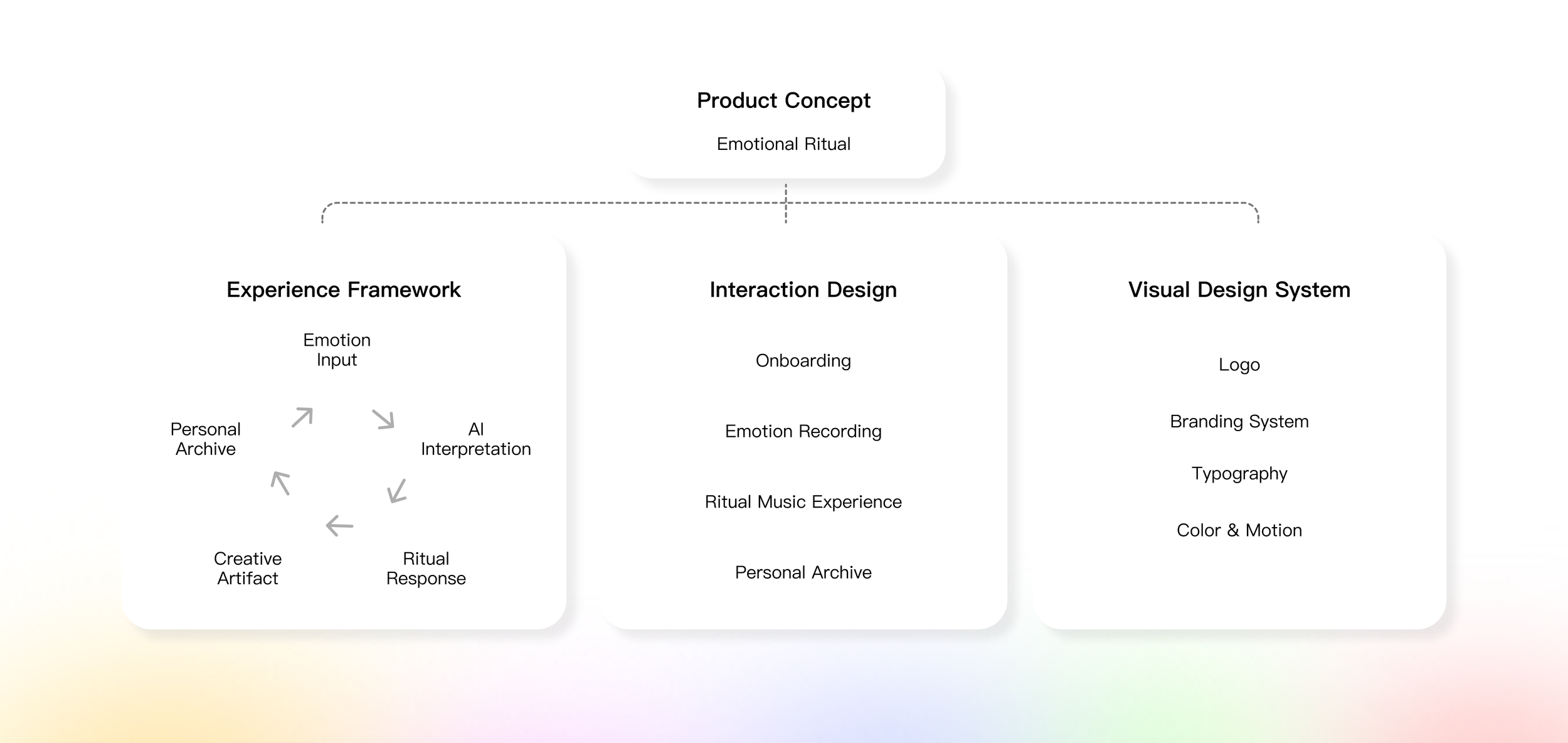
Defined the Emotional Ritual Framework
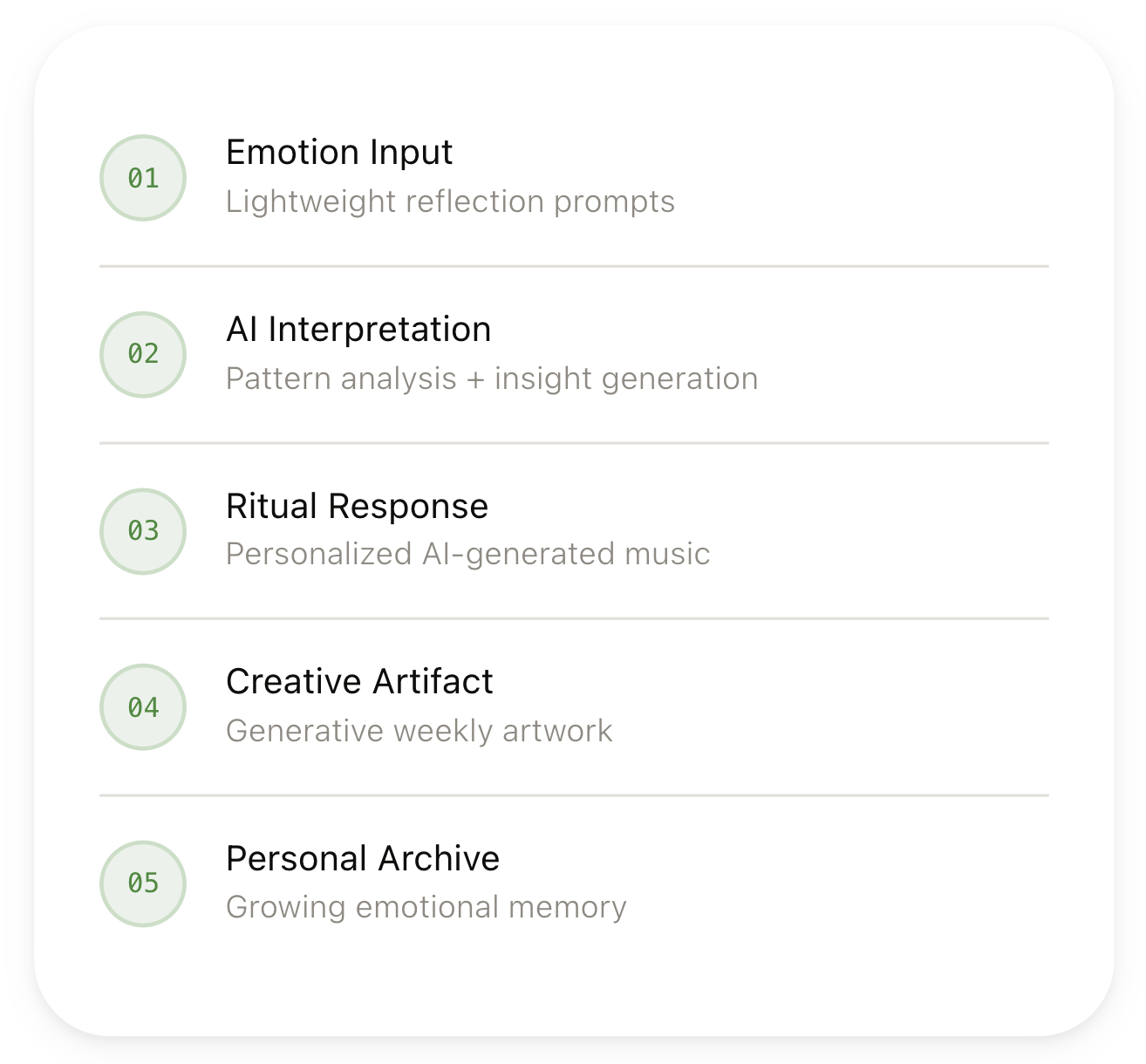
Developed the core product concept — a five-stage cycle connecting emotional input, AI interpretation, music rituals, generative artwork, and a growing personal archive.
Designed the Core Product Experience
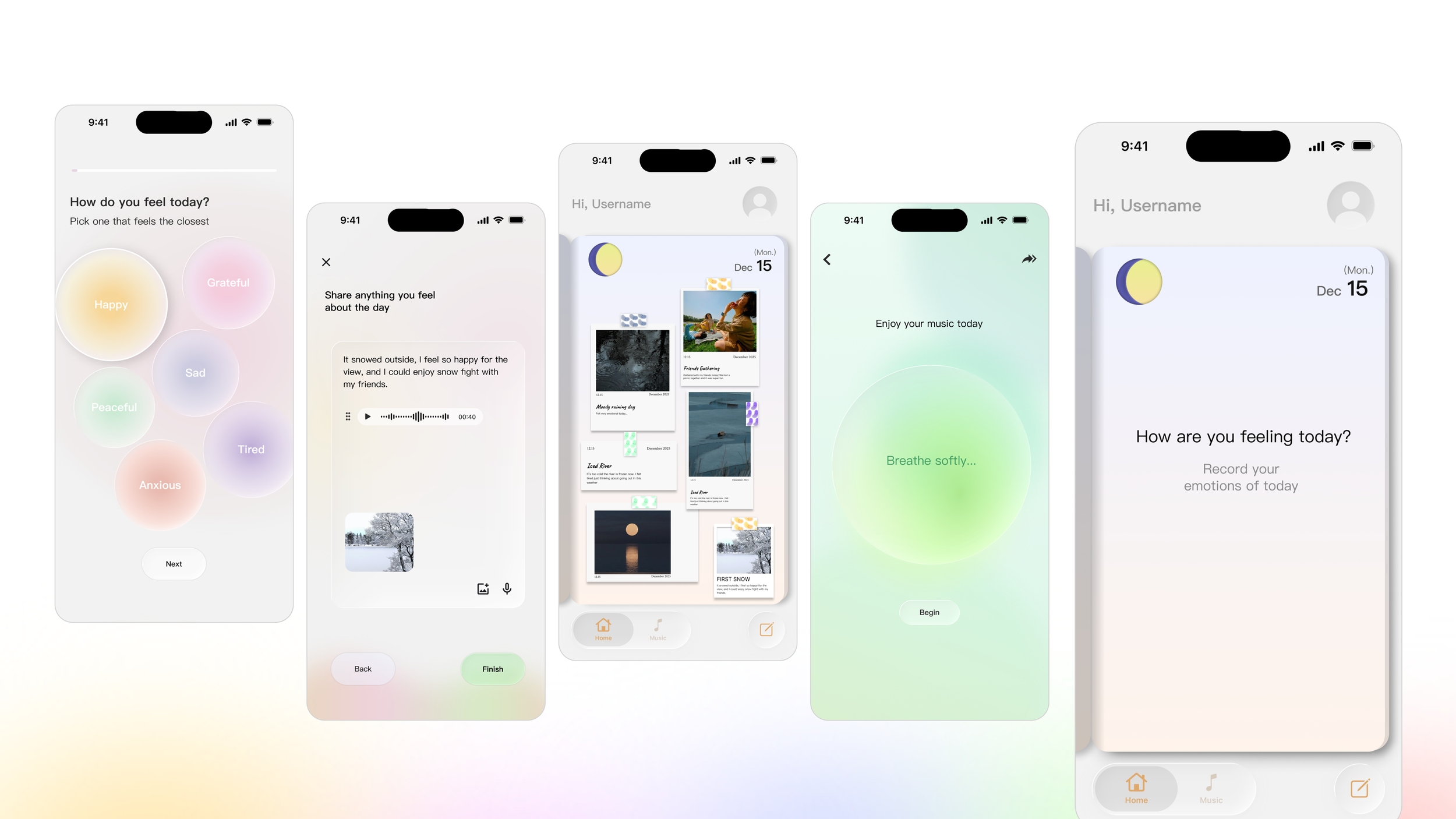
Created interaction flows and high-fidelity prototypes across onboarding, emotional input, ritual listening, and artifact archive — from first screen to final handoff.
Built the Visual and Interaction System
Designed a scalable UI language — soft gradients, guided prompts, rounded forms — and made three pivotal interaction decisions that shaped the product's emotional character.
CONTEXT
From a gap in the market to a product concept.
Modern digital tools help us optimize productivity, but very few create space for emotional reflection. Ritual With Me is a 0→1 AI product concept exploring how generative AI can transform emotional input into music and personalized artwork — turning a mood log into a daily ritual worth returning to.
Developed over three months (Nov 2025–Jan 2026) as a mobile iOS concept, the project required defining the entire product from scratch: concept, experience model, interaction flows, and visual system. As the UI/UX designer, I was responsible for every layer of the product design — from defining the ritual framework to delivering a high-fidelity prototype used to present the concept to stakeholders.
App Audit - What We Found
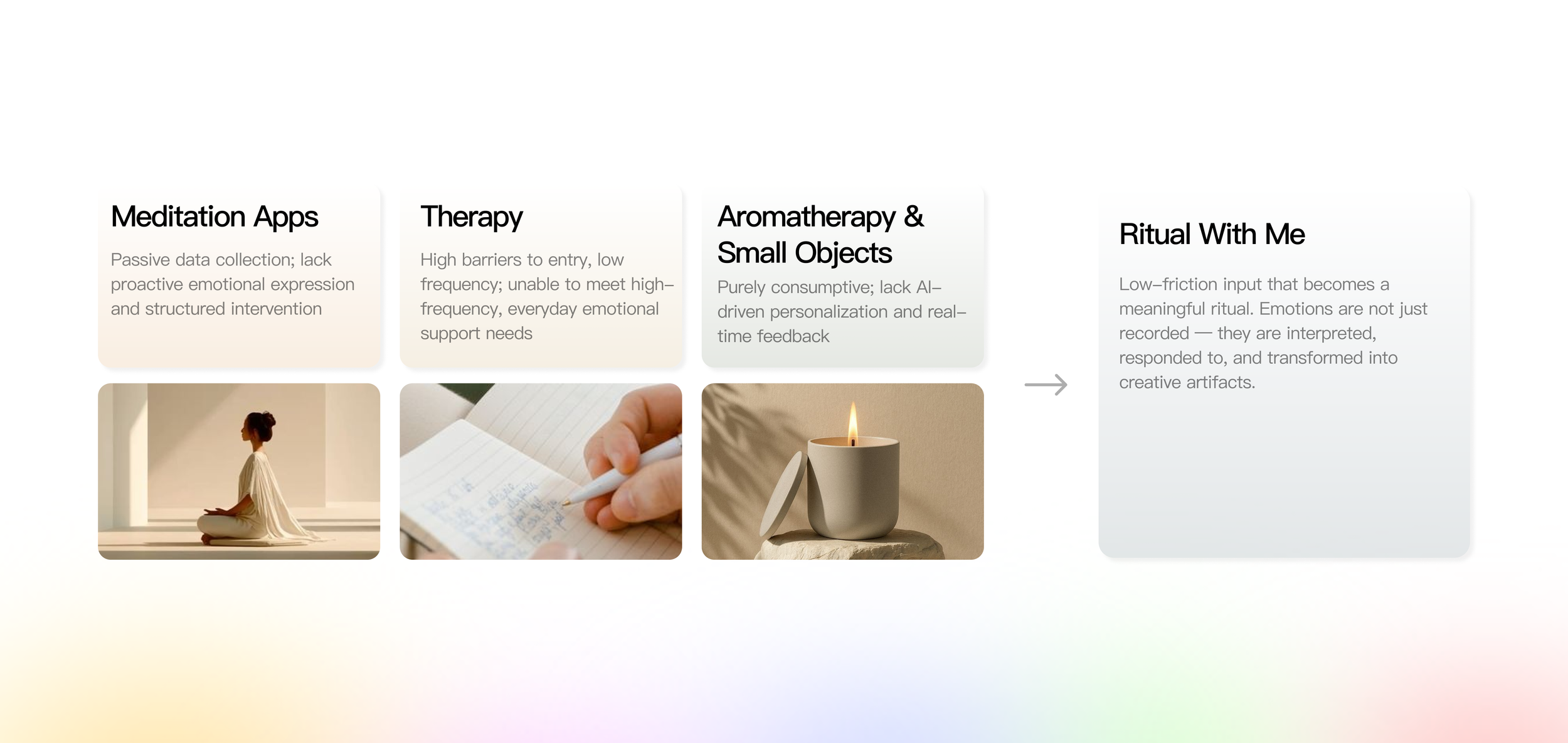
Mood trackers only record, not reflect
Mood trackers excel at quick logging, but the experience ends at input. Users get a chart — no interpretation, no response, no value for their self-disclosure.
Journaling Apps have depth but not accessible
Journaling creates space for real reflection, but demands time, vocabulary, and emotional readiness. The blank page is a barrier that makes daily consistency hard to sustain.
Ritual With Me - Input that becomes experience
Instead of asking users to produce content, the app responds with content — a 60-second check-in becomes a personalized music ritual and weekly generative artwork.
PROBLEM
Existing tools treat emotions like data to collect.
Tracking, not Processing
Most mood tracking apps record emotional data and move on — reflection ends when the input ends. Journaling tools offer more depth but require effort that makes daily practice difficult to sustain. Neither creates a meaningful space for emotional processing.
Finding 01
Habit requires near-zero friction
Apps fail not because users don't care about reflection — but because the effort exceeds the reward. Daily practice demands almost zero friction to survive beyond the first week.
Original Situation
Instead of building another tracking tool, the challenge became designing an experience that transforms emotional reflection into a meaningful ritual — one that gives users something beautiful in return for showing up daily.
Finding 02
One-sided logging breeds abandonment
Mood tracker users described the experience as "checking a box." Logging data without receiving value in return creates a one-directional relationship that quickly loses its pull.
Finding 03
Creative output extends engagement
Apps that gave users something beautiful in return — artwork, music, visual summaries — showed stronger emotional resonance. Creativity turns passive logging into an experience with personal meaning.
How might we transform emotional reflection into a creative and meaningful ritual experience using AI?
Design a System, not a Form
Reframed Problem
SOLUTION
A ritual, not a form to fill in.
Ritual With Me transforms emotional reflection into a four-stage experience — from a personalized first encounter through daily input, AI interpretation, and a music ritual that turns feelings into lived experience.
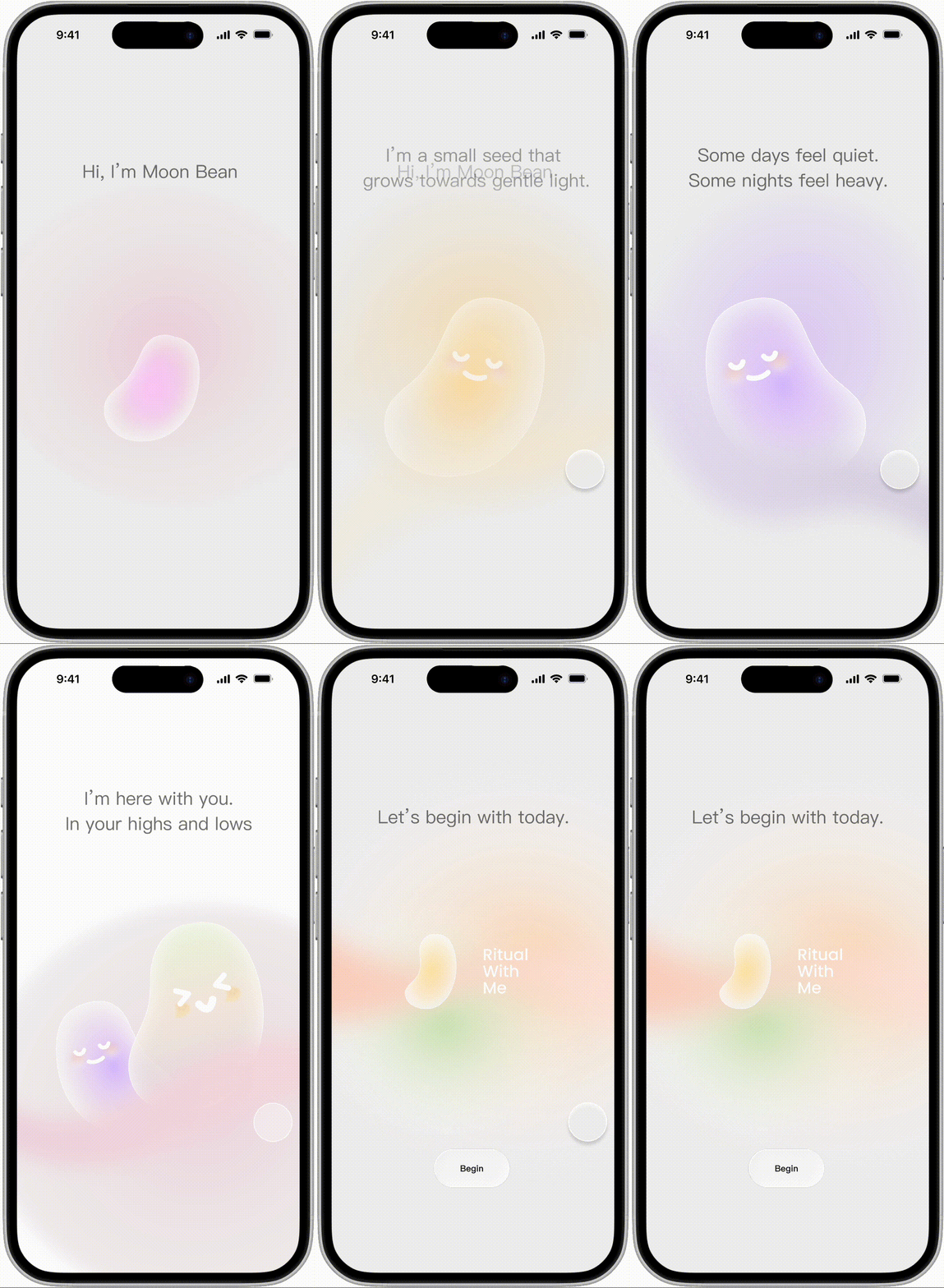
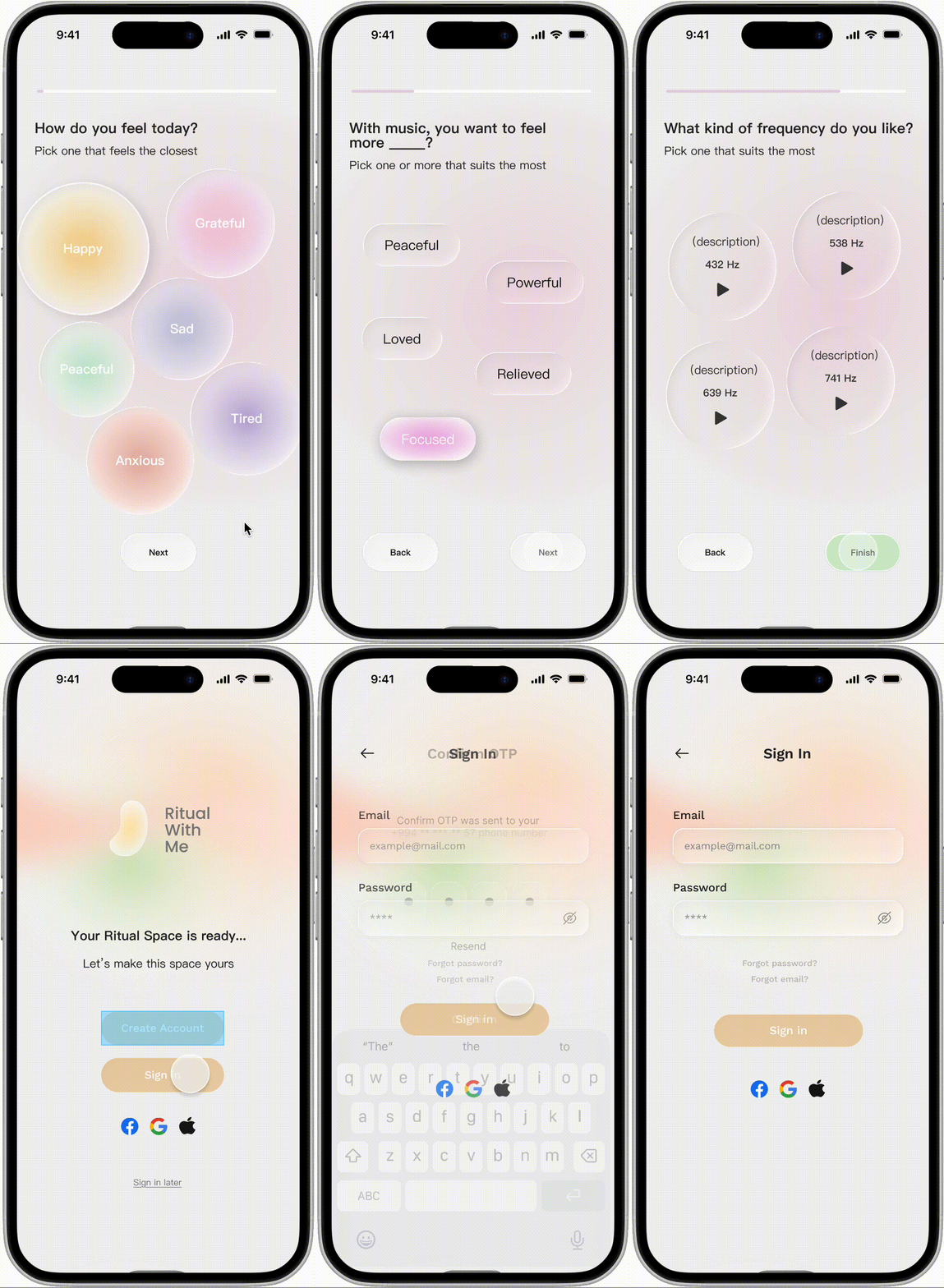
Entering the ritual space.
The onboarding experience introduces the idea of emotional rituals while helping the system understand the user's emotional and aesthetic preferences. Through a small set of guided questions, users shape a personal profile that the system uses to generate more meaningful ritual experiences.
Rather than overwhelming users with technical configuration, the onboarding frames personalization as the first step of the ritual itself — establishing the emotional tone, musical tendencies, and creative preferences that will influence future reflections.
Design principle: Personalization should feel like shaping your ritual identity, not configuring an app.
Why personalization during onboarding: because Ritual With Me generates music and creative artifacts based on emotional input, the system needs an initial understanding of the user's preferences. These early signals help the AI produce ritual outputs that feel personally meaningful from the very first experience.
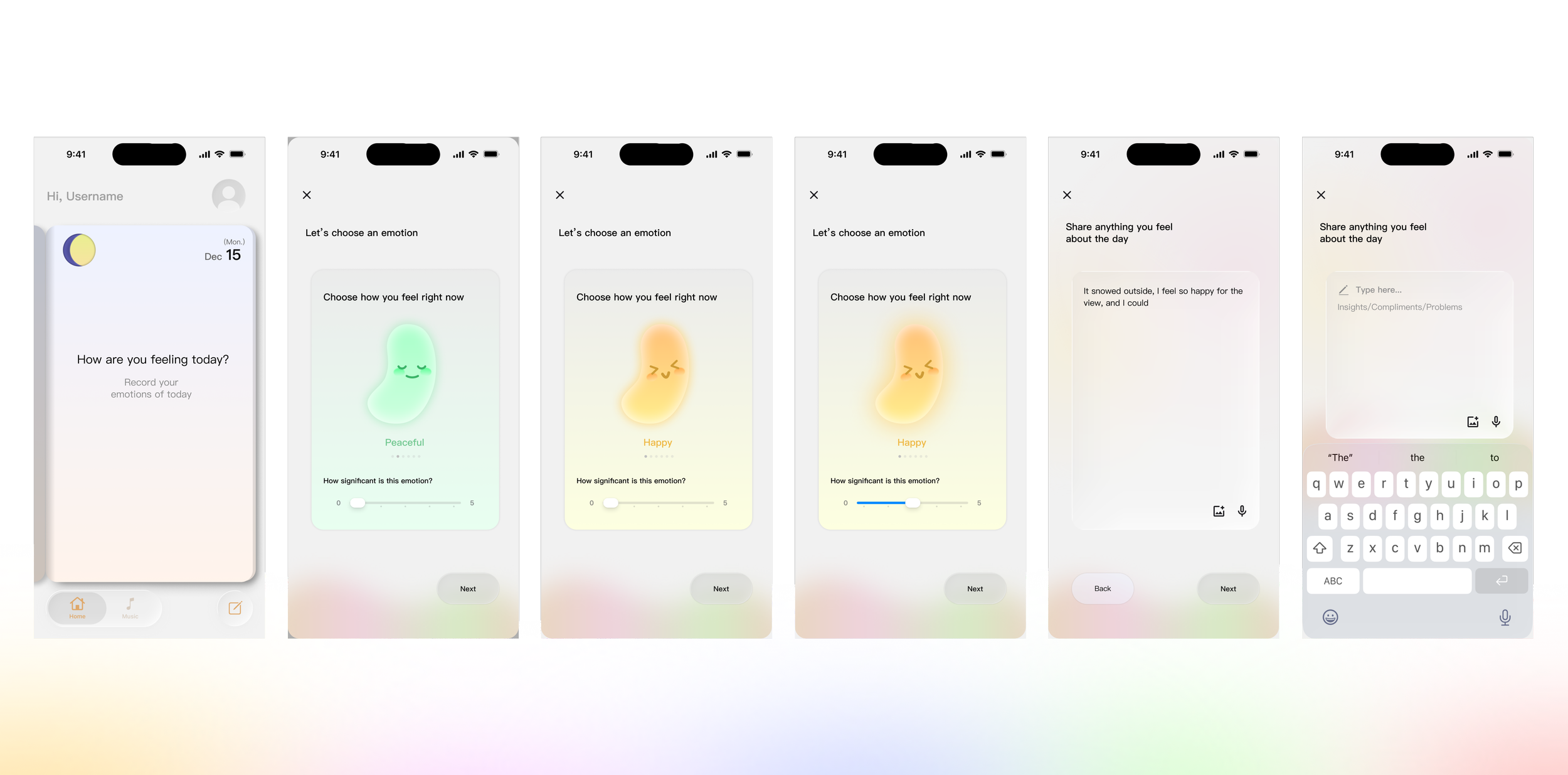
Reflection without the blank page.
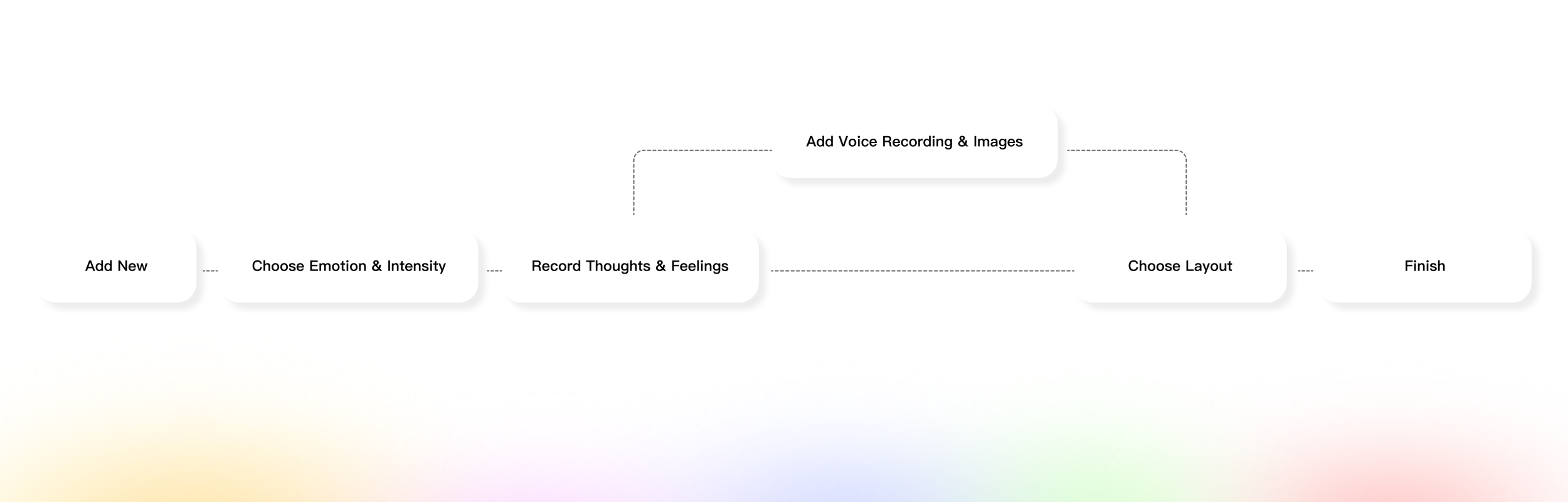
Instead of open-ended journaling, guided prompts and emotion selections lower the barrier to daily reflection. Users can complete their ritual in about 60 seconds — without the friction of a blank page or the effort of writing a long entry.
Design principle: Easy enough to do in 60 seconds. Meaningful enough to want to do every day.
Why this over open journaling: open text demanded vocabulary and time users didn't consistently have. Guided prompts capture the same emotional signal with a fraction of the effort while producing more structured inputs for the AI to interpret.
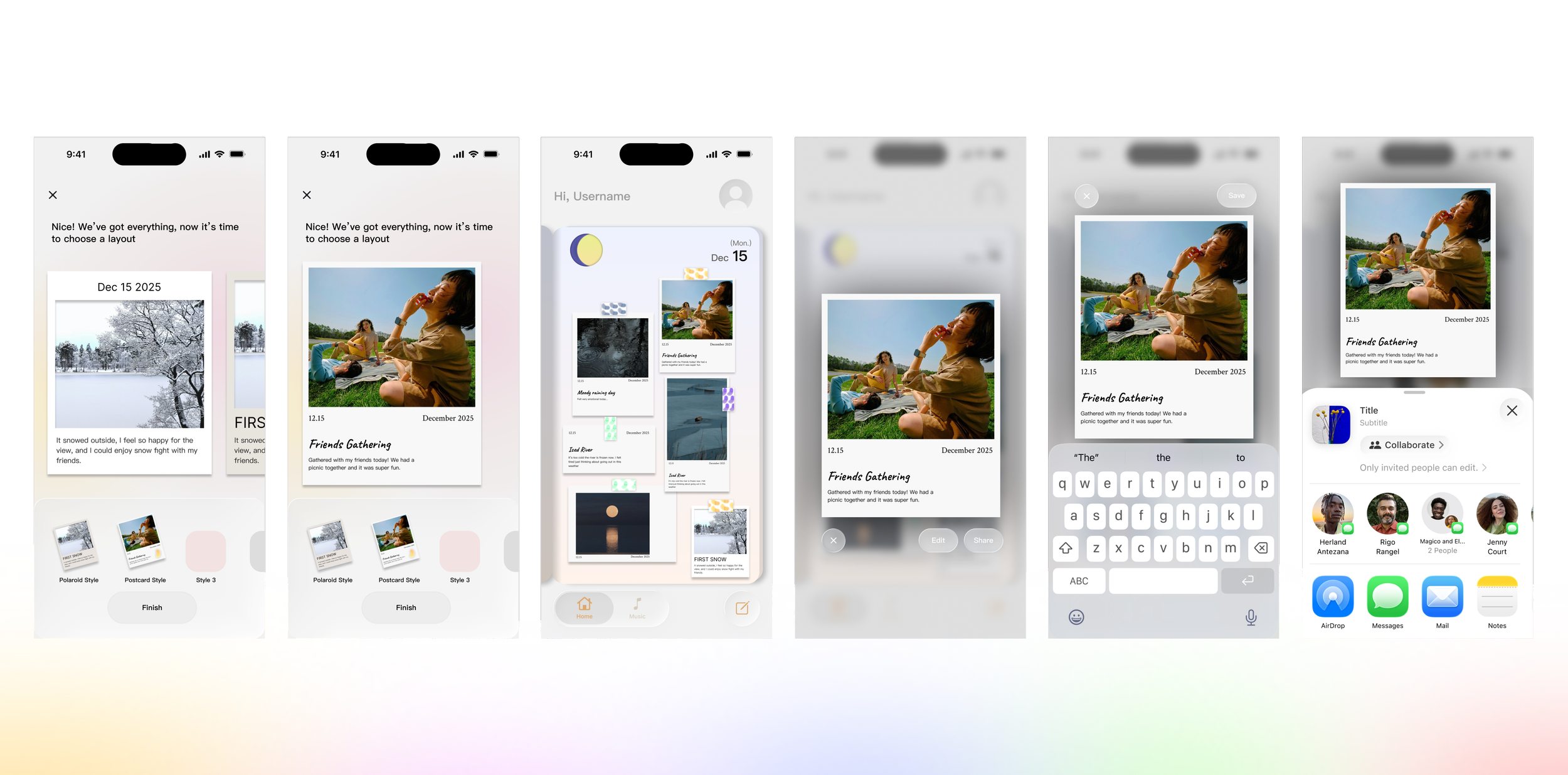
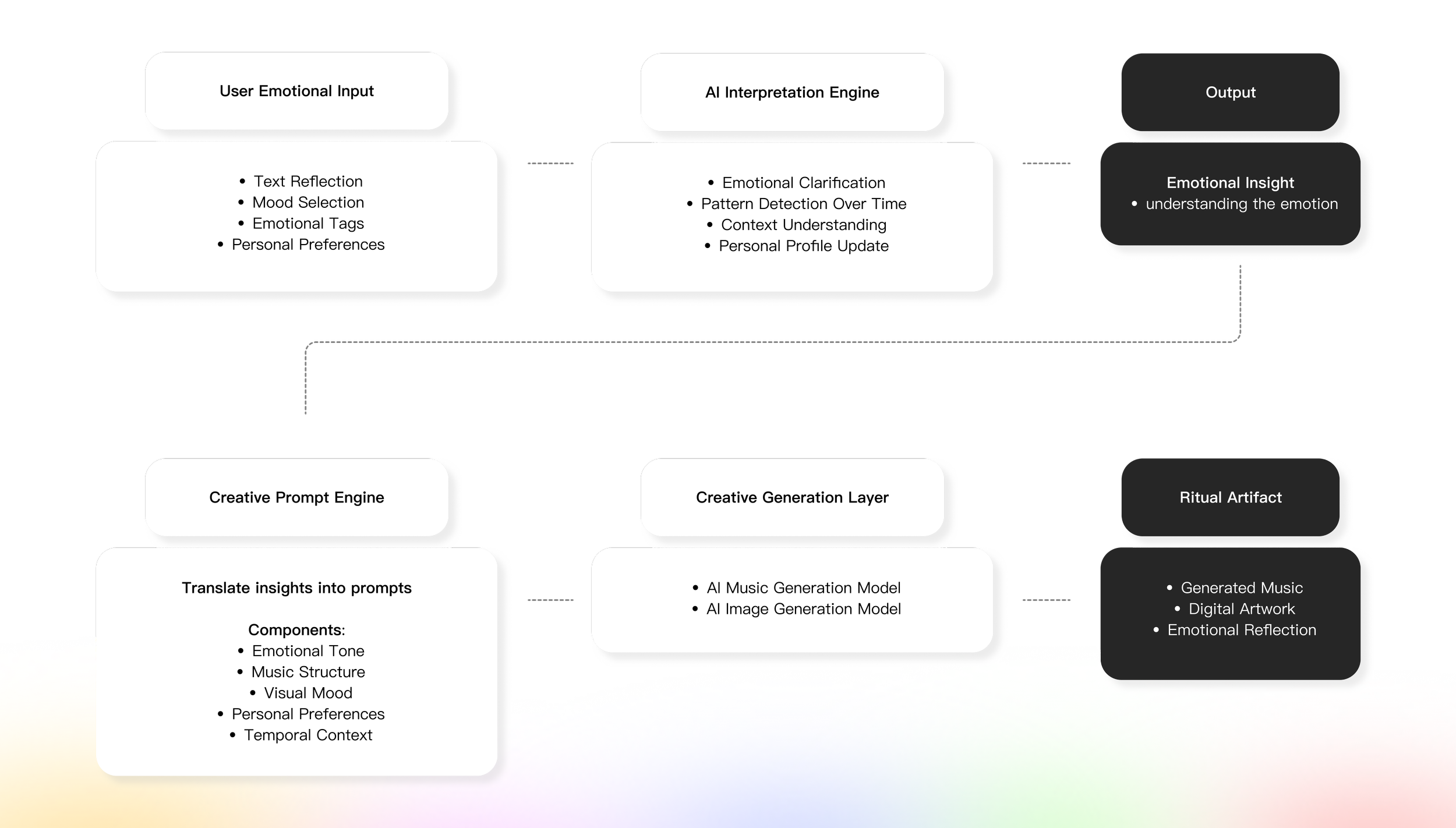
Patterns the user can't see themselves.
The AI layer analyzes emotional inputs over time to detect patterns and generate personalized insights. The goal is not diagnosis — it is offering a mirror that helps users understand themselves more clearly.
The system is designed to feel like a thoughtful companion rather than an analytics dashboard.
Why companion framing over analytics: a dashboard would reinforce the "emotion as data" paradigm the product was designed to escape. Positioning the AI as an empathetic observer — surfacing patterns with warmth instead of clinical neutrality — changes how users relate to their own emotional data.
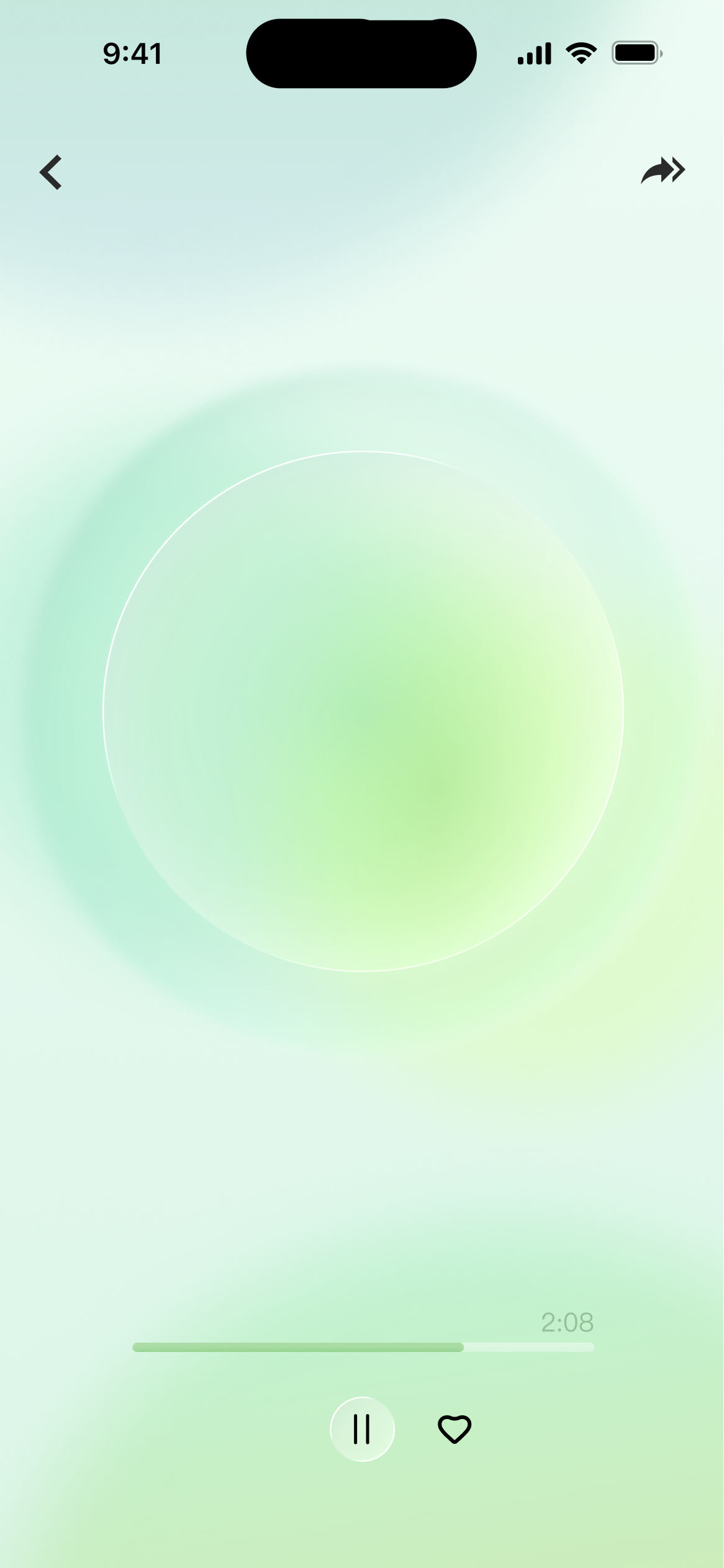
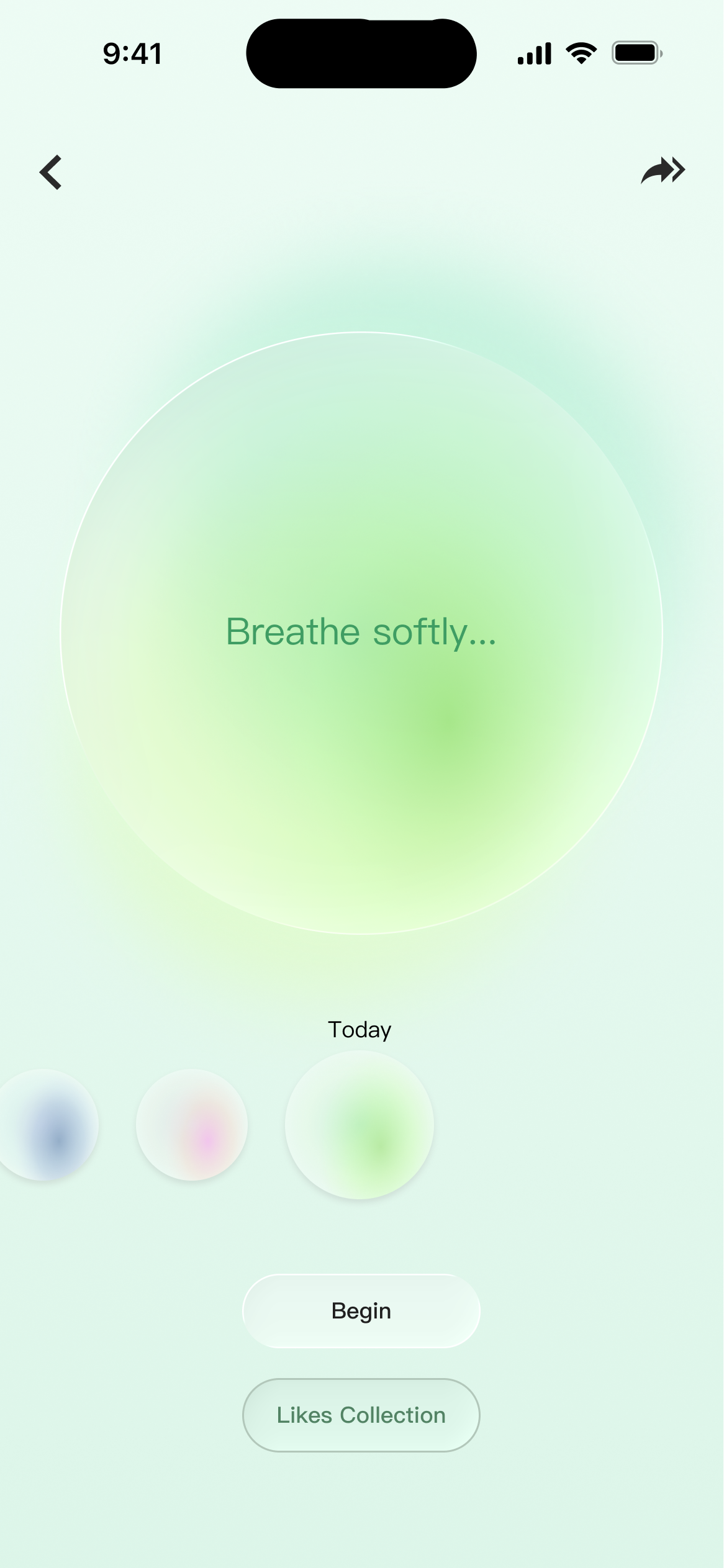
Music as the medium of processing.
Based on the interpreted emotional state, the system generates personalized AI music, creating a moment of pause that naturally encourages emotional processing without demanding additional effort from the user.
Music was chosen because it allows users to process emotions passively, without needing to analyze or explain them.
Why generated music over curated playlists: curated playlists feel pre-made and disconnected from the moment. Generated music is personal by construction — its variability reinforces the idea that each ritual is a unique response to today's emotional state.
Phase 01
Research & Discovery
Receiving project brief → understanding goals and constraints
Building on initial user insights from product team
Competitive / market analysis of emotional reflection tools
Synthesizing insights into key user needs
Phase 02
Ideation
Early interaction exploration (cards, notebook reflection, prompts)
Low-fidelity sketches and flow diagrams
Information architecture and navigation logic
Mapping user flows and decision points
PROCESS
Design Process
Visual tone exploration and moodboards
Color palette, typography, iconography
Layout system and component design
Style guide and interface consistency
Phase 03
Visual Design & System
High-fidelity UI mockups
Interaction design and microinteractions
Prototype flows across the ritual experience
Iteration and refinement
Phase 04
Prototyping & Integration
REFLECTION
What designing for emotional experience taught me.
This project reshaped how I think about designing for emotions. Instead of treating emotions as data points to record, I began to see them as experiences that can be interpreted, transformed, and revisited. Designing Ritual With Me reinforced my belief that AI should help people understand themselves more deeply — not just optimize their time.
It also taught me to approach product design as a system. When you are building 0→1, every decision is also a precedent — concept, interaction, and visual language are inseparable. Holding all three in mind at once, without an existing product to react to, required a clarity of design philosophy I hadn't needed before.
Ritual-based interactions can transform simple digital actions into emotionally engaging experiences — and that transformation is itself a design outcome worth pursuing.